In the previous installment of Teamwork Makes the Dream Work, author Melanie Lee and illustrator Arif Rafhan shared their collaborative process. Another popular partnership is one between a specialist and an illustrator.
This interview features wildlife ecologist Debby Ng, illustrator Darel Seow, and their book titled Marvellous Mammals: A Wild A to Z of Southeast Asia, a beautifully illustrated compendium that showcases lesser-known animals of Southeast Asia.
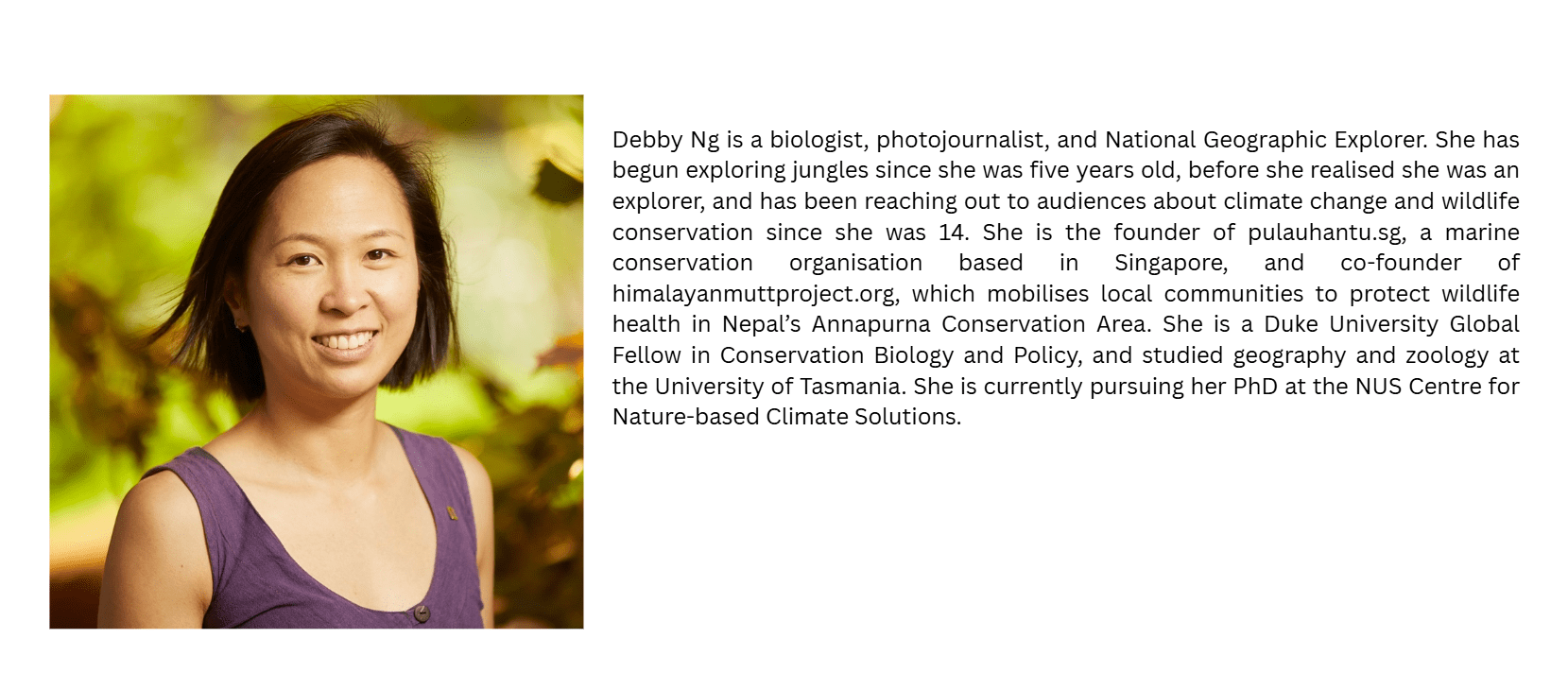
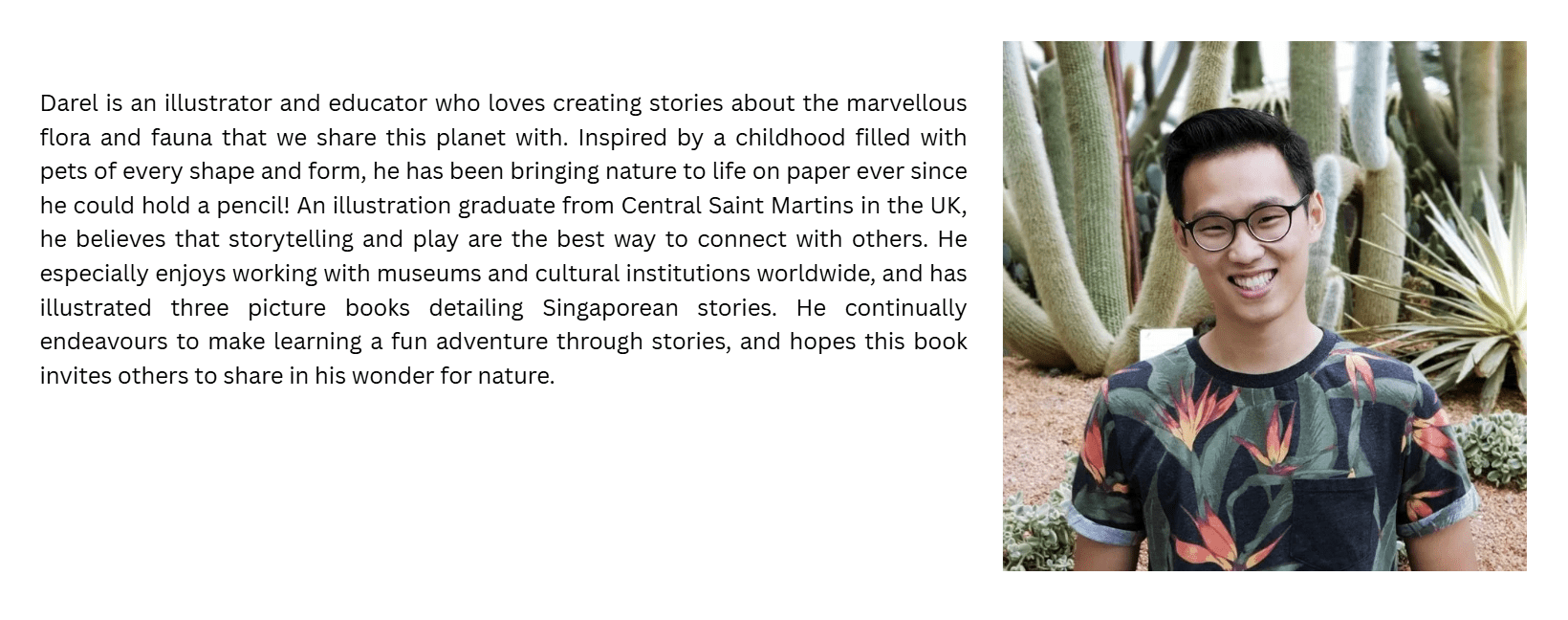
How did you guys come to work together?
Debby: Difference Engine brought Darel and I together – the editorial team and I loved his artwork and felt it would really bring our content to life! Darel’s commitment to showcasing and telling stories about Singapore’s wildlife, in addition to his artistic style, was also an important part of wanting to work with him.
Darel: It was great getting to work with Debby, I was really impressed and excited by the projects she’s been involved in, how much she knows and how this could be channeled into Marvellous Mammals.

What is your collaborative process?
Debby: Darel and I worked together to curate a list of mammals that could be represented by the 26 letters of the alphabet, but also represented the diverse shapes, colours, habitats, behaviours, cultures, and threats that are important to our story about mammals in Southeast Asia. We wanted to include popular animals like tigers and orangutans, but we also wanted to include rare animals that many people in the world do not know about. So we found interesting ways to include some of these popular animals, while still giving space for lesser-known animals to be featured. For example, tapirs are very special to Southeast Asia, and also endangered. But we can only have one animal for the letter T. Or could we? We decided that it was important to include both. So created the context, i.e. tiger prey on tapirs, and Darel’s artwork showed a tiger stalking a tapir! We loved these creative solutions to tell our stories. It showed relationships between animals, and also enriched the overall story of the book.

Another challenge was to break the monotony of colours – In his early sketches, Darel shared that many mammals are brown or shades of grey, and that breaking this monotony was something we’d have to think about. Understanding these visual aspects, I could create copy that described the animals during different times of the day, for example, animals that were active at night would look a different colour under moonlight, or the setting sun. Showcasing the tapir, hidden in the shadows of the thick canopy also shows how its colour pattern helps it to blend in with its environment.
What are the advantages and challenges of working collaboratively vs. solo?
Debby: I’m a big believer of teamwork! Writing a book is definitely a team effort – there is so much to learn when ideas are seen with fresh eyes and a different perspective. Even though I am the author of the book, it is really important to acknowledge all the researchers and scientists and communities that helped me identify the animals correctly (some animals have very few specimens in the museum and maybe only one official manuscript describing its body and patterns, so consultations with experts were necessary to verify the information). I spoke to volunteers working with indigenous people to verify the indigenous names and what the names mean. Some indigenous words are used for some groups of animals, rather than specific species, so this too had to be verified. The editorial team at DE gave me wonderful insight into how readers might respond to the writing and how their experience could be enhanced. Everything from the words, to the texture of the paper and the size of the book and illustrations could only have come together so wonderfully with team work.
Working solo is reflective work, and setting a personal goal for the book. Assimilating ideas, and finding resonance with the project. I reflected on what impact I wanted the book to have. My personal goal was for audiences to experience empathy and awe for Southeast Asia’s wildlife. I wanted readers to sometimes feel sad, because some animals might be extinct, but also hope and excitement, because there were also animals that had been recently discovered! To feel that we, here in Southeast Asia, are part of this wonderful world that is not often seen or revealed in mainstream media. However, executing a book is definitely team work.
Darel: One big advantage for someone who’s perpetually busy and indecisive like me is that it means the book gets produced! It’s easy to keep pushing deadlines down the road if I had worked solo, and I felt directly responsible for any delays while working on the book so it ensured I was always making progress. Additionally, having Debby as the expert gave me more creative freedom since I could stylise the animals and she would weigh in if it didn’t look quite right. In my own illustrations, I enjoy depicting animals but all the information I have is based on what I can find online, so Debby’s knowledge of these animals allowed me to represent them in a way that reveals their behaviour (and a bit of their personality). The team was really supportive and helpful in terms of providing feedback on the illustrations and I appreciated the additional points of view while still leaving me to make most of the creative decisions so I didn’t have to deal with the typical downsides of working collaboratively. Working solo generally means I get to move more quickly and have full creative control, but in this case the benefits didn’t really apply so I definitely had a lot to gain from working in a team!
Was there an incident when you guys had a creative difference, and how did you overcome it together?
Debby: At the start of the book, we have a bar-tailed godwit that takes us on a journey through the book. The bar-tailed godwit is one of several migratory birds that does an incredible flight across many countries in Southeast Asia twice a year. Initially, I had planned for a young girl to lead us on this adventure, but Darel’s animal drawings are really his specialty. So I had to think of a way to create a guide for our adventure with an animal. I didn’t just want to replace the girl with any animal, it would have to make sense and be part of the story. The bar-tailed godwit came to mind, as I had recently sighted the bird in the wild, and marvelled at its journey. It also visits all the countries that are represented in the book, and the additional story of how migratory birds are losing their habitat in all the countries along its migratory route seemed an important story to tell alongside the stories of all the mammals being featured in the book.
Darel: It wasn’t quite a creative difference but I got cold feet just as the deadlines were nearing, and wanted to change the visual style of the book to something that I felt worked better. However, given the urgency of the situation, I was encouraged by the whole team to push on and do the best with the current illustrations. I would have been stuck going around in circles and the book might never have been produced, so I am very thankful that they disagreed with me!
If Debby and Darel were to work on another book together, what would you do the same and what would you do differently and why?
Darel: I think we worked really well on the book and would create it the same way! As it was created during the COVID period, we didn’t get the chance to meet too often and I personally enjoy in-person sessions where we’d get to play around with ideas more freely and is something I missed.
Where do you get your inspiration?
Debby: I continue to explore the great outdoors, and learn from other artists, scientists, educators, and activists who spend their time working to protect these animals and their habitats. The marvellous natural world, and this community of explorers who are taking action to save our planet in their own unique ways is my inspiration.
Darel: I’m very much inspired by nature in my creative work, though I’m afraid I don’t spend enough time outdoors, often resorting to doing research behind a screen, so I’m inspired by Debby and what she does in nature. I’m endlessly fascinated by how bizarre and wonderful nature is and I make work to share what I find so interesting with others!
What advice do you have for creators who want to work in teams?
Debby: Work with creators who enrich and inspire you.
Darel: Be open to possibilities! You never know what your partner knows that you don’t and more interestingly, how the combination of your specialties can result in something new that neither of you would have even imagined!
If you want to learn more about the creators and their work, please go to:
 Michelle S. Lin